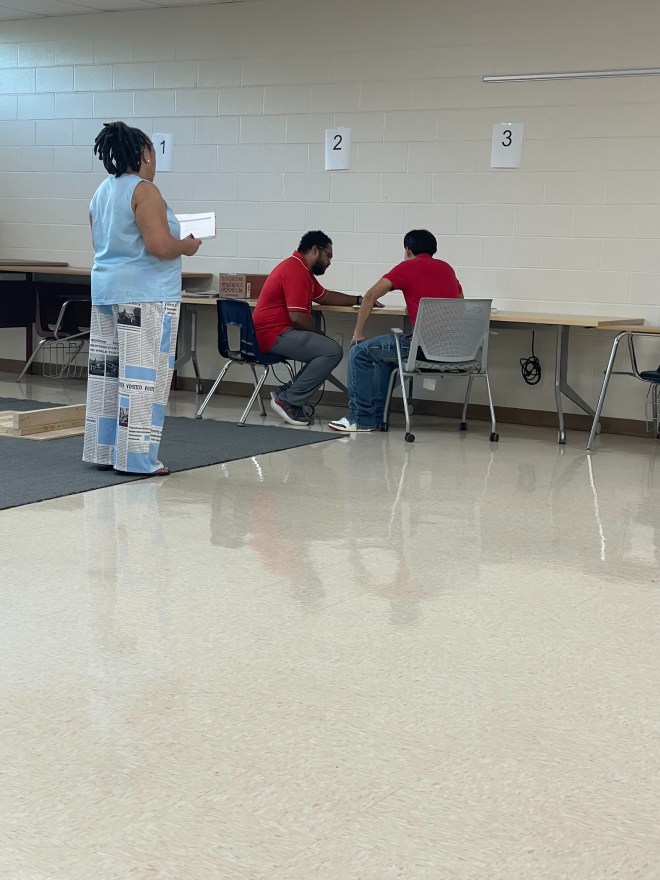
There is something powerful about learning alongside someone else. This year, I have the opportunity to mentor a first-year co-teacher, and recently, we took our first instructional walks together. I was especially excited about this experience because it wasn’t about me telling her what to look for. It was about collaborating with her to decide what she wanted to see, notice, and learn from other teachers.
Our district’s Model of Instruction is based on The New Art and Science of Teaching, so we began there. Together, she identified two elements she wanted to focus on during our walks: Elaborating on Information in Content and Increasing Response Rates in Context.
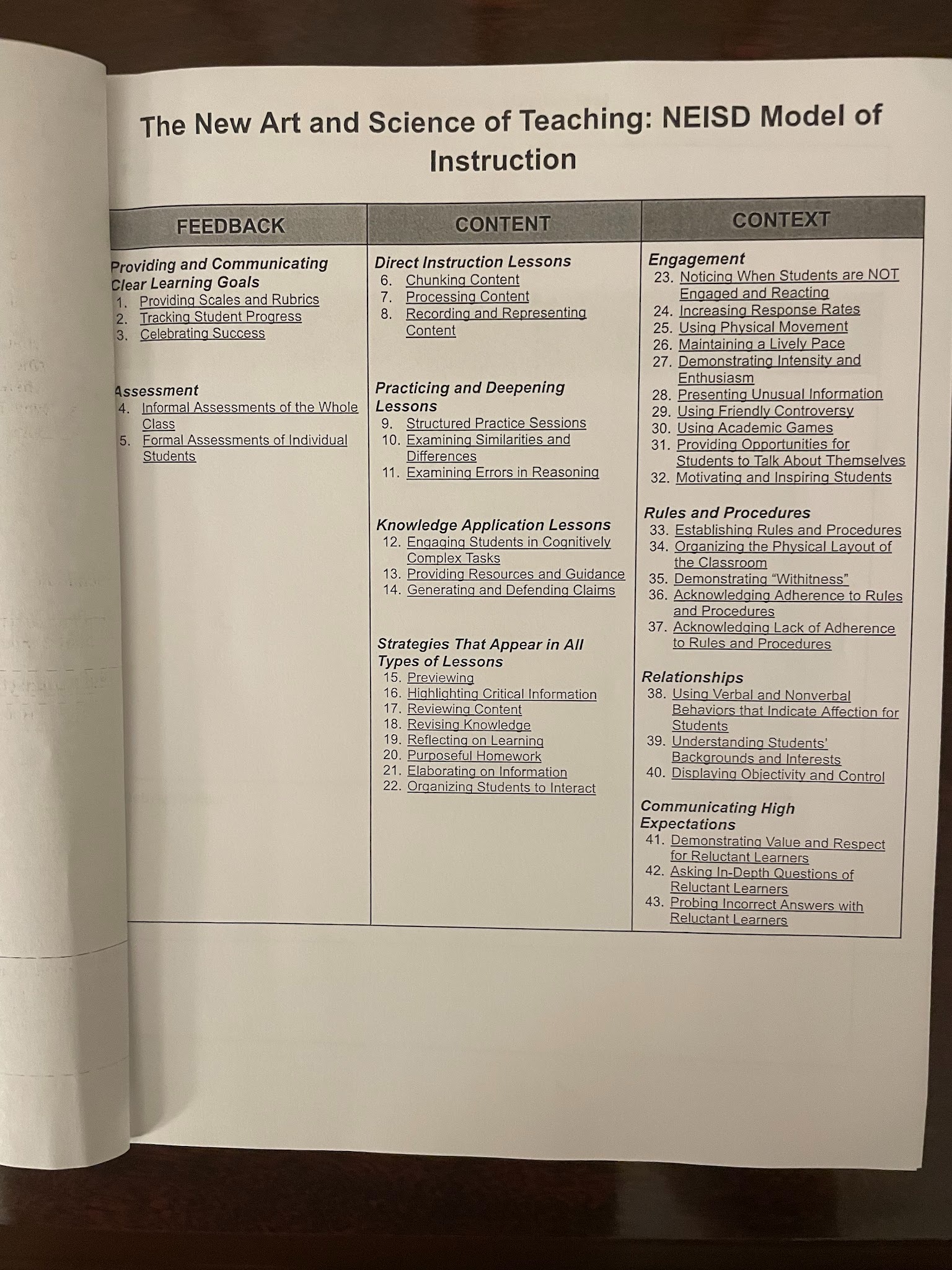
From there, we discussed the template created by our Dean/Instructional Coach team to help focus the observation. We considered two questions: What teacher actions are associated with effective instructional moves? And what student actions show evidence of learning and engagement? Having specific lenses, along with the elements she had chosen, gave our walks purpose. We weren’t simply walking into classrooms and saying, “That was good teaching.” We were learning to see why it was effective.
Seeing Co-Teaching in Action
During our first walk, we visited an Algebra I co-teaching pair. One of the things that immediately stood out was the way the co-teacher continuously circled the room and checked in with individual students. It was more than simply walking around the classroom. He was gathering information. He was noticing who understood, who needed clarification, who was ready to move forward, and who needed a little more support. His movement around the room created opportunities for students to respond, ask questions, and receive feedback without interrupting the flow of instruction.
Then we saw something that really stood out to my mentee. A student who had been absent returned to class. Rather than allowing that student to simply try to figure out what he had missed, the co-teacher naturally pulled him aside and provided the instruction he needed to get caught up. He worked with him until he was ready to rejoin the rest of the class. It was such a simple moment, but it illustrated so much. The teacher was responding to an individual learner while still maintaining the momentum of the class. He wasn’t treating the absent student as an interruption to the lesson. He was finding a way to bring him into the learning.
That moment gave us a lot to talk about—not only the instructional move itself, but the possibilities it created for effective co-teaching.
Learning Through Movement
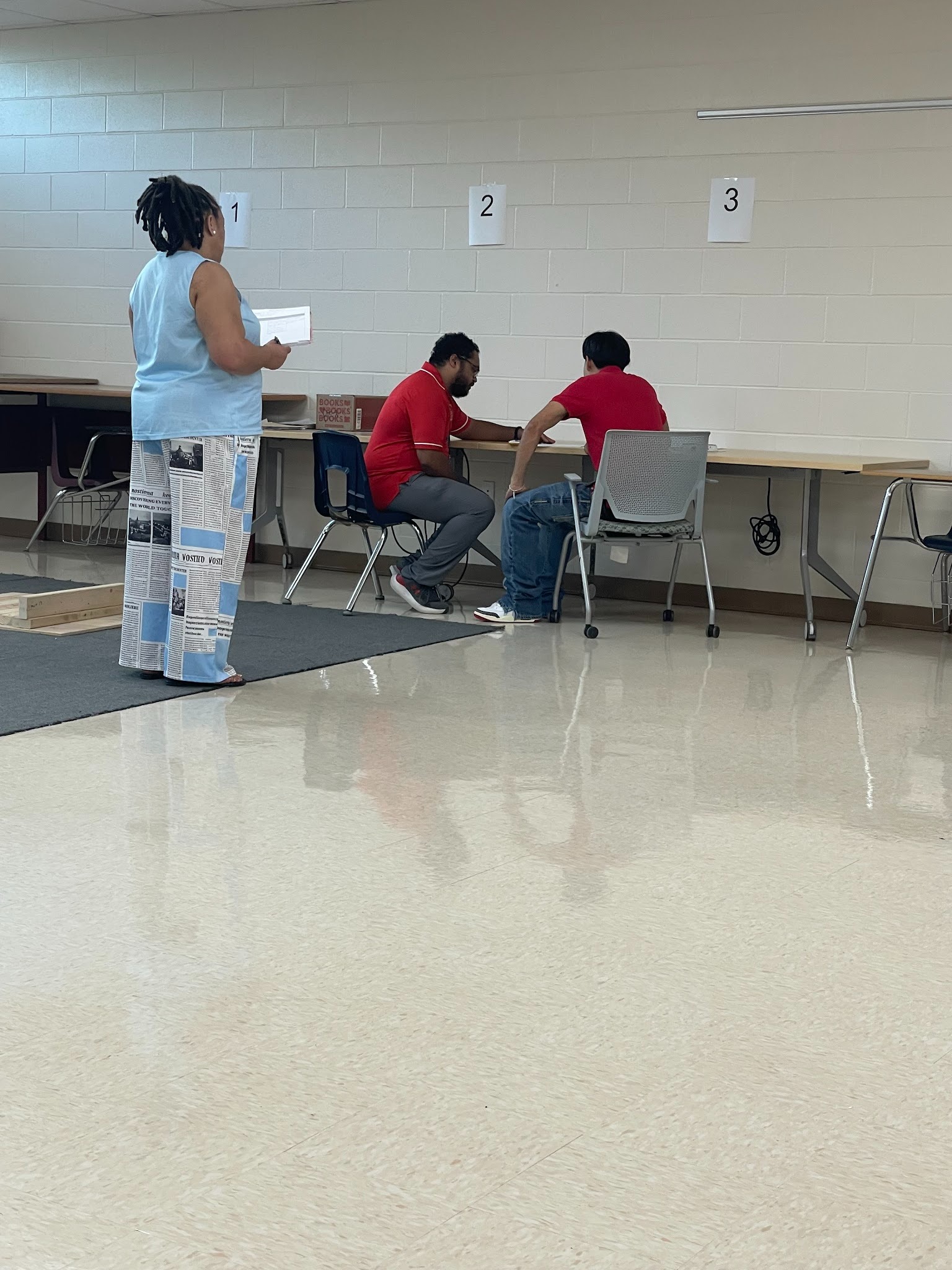
In another classroom, we noticed a different set of instructional moves. The teacher had established a natural rhythm:
Direct teach, circulate and monitor, allow students to practice, come back together, clarify and address what students need.
Together, we noticed that the teacher wasn’t stationary at the front of the room delivering information for an extended period of time. She moved intentionally—from whole-group instruction to individual students, from monitoring practice to bringing the class back together when clarification was needed. What we loved was how her physical movement supported the instructional design. Again, we weren’t simply observing what the teacher did. We got to debrief- what instructional routine was made possible for students?
I think this is one of the most powerful questions we can ask when we are observing instruction. A teacher move isn’t just about what the teacher is doing. It’s about what that move makes possible for students.
- Does it create more opportunities for students to respond?
- Does it help a student access information they missed?
- Does it give the teacher information about student understanding?
- Does it allow students to practice before returning to whole-group instruction?
- Does it create space for clarification, connection, or deeper thinking?
When we look at instruction through that lens, an instructional walk becomes more than an observation. It becomes an opportunity to study teaching and learning.
Our first mentor/mentee instructional walk reminded me that sometimes the most powerful professional learning happens when we slow down enough to really notice. Having a specific focus gave us a shared language and a reason to look more closely. We could talk about what we saw, connect those observations to The New Art and Science of Teaching, and consider how those instructional moves might look in her own classroom.
A Full-Circle Moment
This experience also took me back to one of my earliest blog posts, This Month in Classrooms: Volume 1. Years ago, I wrote about how much I valued being in classrooms as an instructional coach—seeing great teaching, noticing the moves teachers made, and celebrating what was happening for students. This instructional walk felt like a continuation of that same practice, but through a new lens. Not just noticing effective instruction myself, but learning alongside a teacher as she develops her own lens for seeing it.

