
This week, I had the opportunity to facilitate a professional learning session that I created on Debate Math: Using Academic Discourse in Math, a strategy created by Chris Luzniak. It was one of those days that reminded me why I love professional learning so much.
My goal of the session was simple: help teachers structure mathematical debate in ways that improve reasoning, communication, and student achievement. We explored what Debate Math is, why academic discourse matters, and how teachers can create opportunities for students to defend and revise their mathematical thinking.
But honestly, the best part wasn’t the slides. It was the teachers.
I started with a question that had nothing to do with mathematics: Which is better—tacos or pizza? It was a fun, low-stakes way to experience what it feels like to make a claim, defend an opinion, listen to someone else’s reasoning, and maybe even reconsider your own thinking.
And that’s exactly the point.
If we want students to engage in meaningful mathematical conversations, we have to give them opportunities to practice the skills of discourse in an environment where they feel comfortable taking risks. The session emphasized establishing routines without the pressure of math anxiety or the need to always be correct.
From there, we moved into the mathematics.
Teachers worked through a problem, shared strategies, questioned one another, defended their thinking, and considered how they could create those same experiences for their students. Debate Math isn’t about “winning” an argument. It’s about using evidence and reasoning to communicate mathematically, critique ideas, and revise our thinking.
One of the most exciting connections came when we connected the experience back to The New Art and Science of Teaching. After teachers engaged in the math-solving task themselves, I asked them to think about which elements from The New Art and Science of Teaching they had experienced during the lesson. The responses started coming—and then they just kept coming. Teachers began naming element after element, recognizing how many familiar instructional practices were naturally embedded in the experience. It was one of those moments when you could almost see the lightbulbs going off. They weren’t learning one more isolated strategy; they were seeing how Debate Math could bring together so many of the high-impact instructional practices they already know and use.
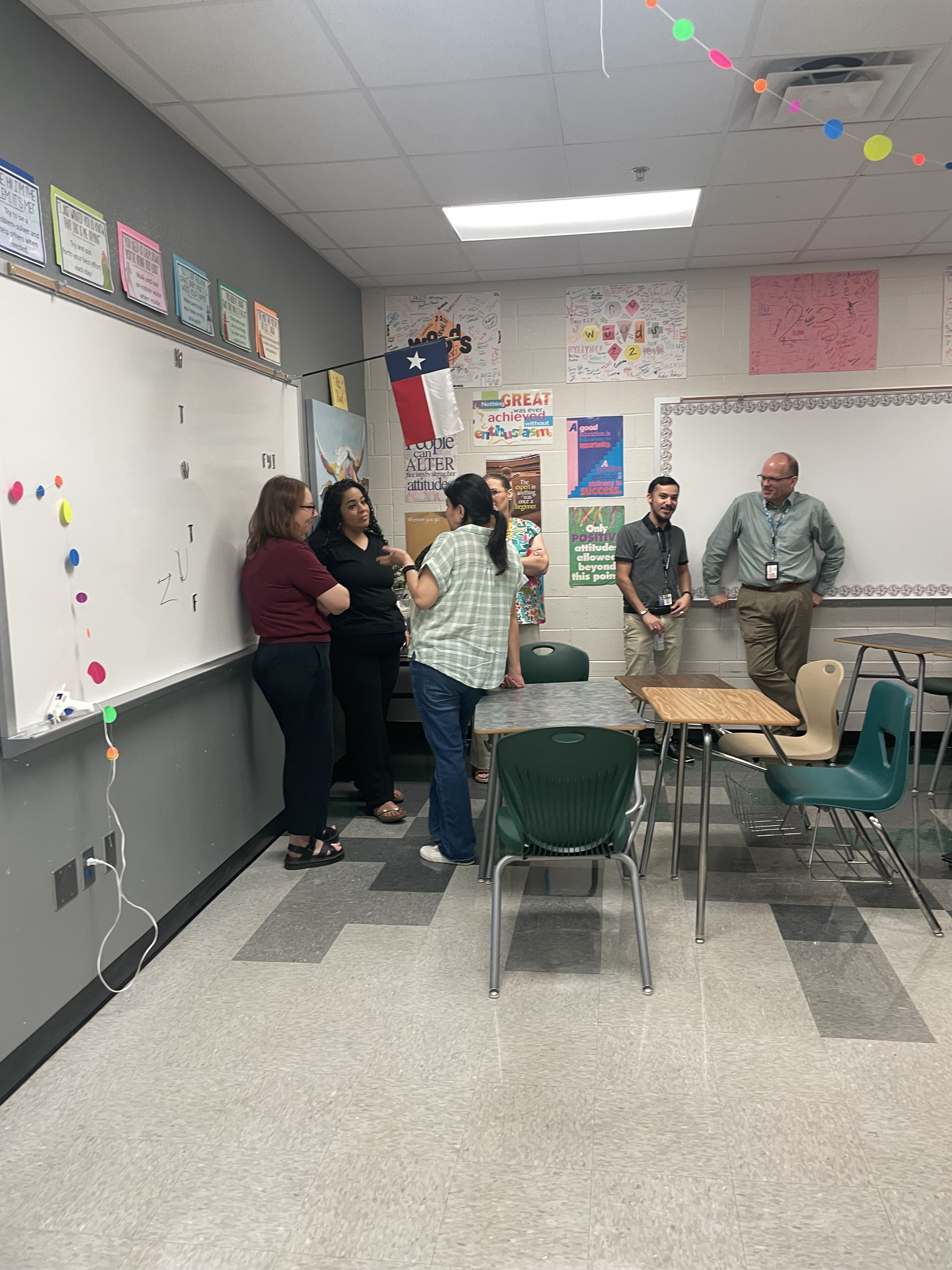
And this is where the collaboration really came alive.
Teachers weren’t just sitting and listening to me talk about academic discourse. They were doing it. They listened to different approaches. They asked questions. They noticed things in someone else’s strategy that they hadn’t considered.
Another favorite moment of mine was watching one teacher actually change her position after hearing the reasoning from the other group. She started on one side of the debate, listened to the evidence and thinking shared by her colleagues, and ultimately decided to switch sides. It was such a simple moment, but it perfectly captured what we want students to experience: being willing to listen and consider all the evidence.
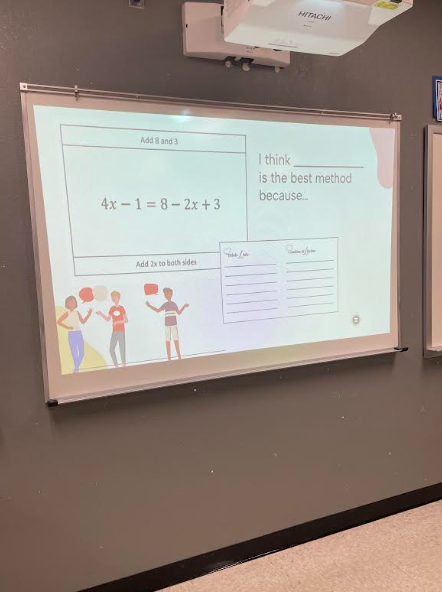
Teachers also collaborated about upcoming lessons and thought about where a debate-worthy question could naturally fit into their instruction. That kind of collaboration is powerful because teachers bring such different experiences, perspectives, and ideas to the table. One teacher’s “Have you thought about trying it this way?” can completely change the way another teacher approaches a lesson.
I also talked about the importance of giving students the language they need to participate in these conversations. Simple sentence stems such as “I agree because…”, “I disagree because…”, “My evidence is…”, “Can you explain…”, and “I solved it differently…” can help move a classroom from students simply sharing answers to students actually engaging with one another’s mathematical thinking.
During the session it was also exciting to watch teachers experience the shift from teacher as the source of answers to teacher as facilitator of thinking. In a Debate Math classroom, the teacher asks questions, presses for reasoning, facilitates the conversation, and resists the urge to immediately confirm whether an answer is correct. I heard and saw the math naturally happen in the conversation.
I left feeling energized—not just because of the content, but because of the conversations. Teachers were willing to share, question, collaborate, laugh, try something new, and think deeply about how to make mathematical discourse a meaningful part of their classrooms.
In the last session at the end of the day it was exciting to be thanked for the session in exactly what I had hoped for- to give our students more opportunities to talk, defend, question, and make sense of mathematics together. Because when students learn to listen to one another, challenge ideas respectfully, use evidence, and build on each other’s thinking, we’re doing more than teaching them how to solve a problem. We’re teaching them how to think mathematically.
Thank you again to Chris Luzniak for inspiring me and our teachers!

